🚀 The 1960s: The Cold War and the Birth of ARPANET
The first spark of the internet was struck at a research agency called ARPA (later DARPA), attached to the US Department of Defense.
At that time there was a great fear:
If one of the country's communication centers were bombed, how would the rest of the system keep working?
To solve this, they thought:
"Instead of a single center, let's build a distributed network. If one point is destroyed, information should still get through using other routes."
And so ARPANET was born.
Think of it with a simple example, Fatih:
If a city has only one main road and that road collapses, everyone gets stuck.
But if there are hundreds of interconnected side roads, traffic keeps flowing.
That was exactly the idea behind the internet.
🔌 1969: The First Connection – The "LO" Message
In 1969, the first data was transferred over cables between UCLA and Stanford.
UCLA wanted to send the word "LOGIN" to Stanford.
But the system was so new that the message crashed after two letters.
The first internet message ever sent:
"LO"
(Like a baby that gets stuck while trying to say hello. 😄)
🖧 The 1970s: The Development of TCP/IP Protocols
The language of the internet was formed here.
Computers needed a "common language" to understand each other.
Two researchers named Vint Cerf and Bob Kahn developed the fundamental communication protocol called TCP/IP, which is still in use today.
For the internet, this is something like an alphabet.
Just as there can be no language without letters, there can be no network without protocols.
🌐 The 1980s: The Internet Opens to the Public
In 1983, ARPANET fully switched to TCP/IP and the modern internet officially began.
In the same period:
The first email systems appeared
Universities set up their own networks
Information sharing became widespread in academic communities
The internet was no longer just a military project.
🕸️ 1991: The Birth of the WWW (World Wide Web)
This, Fatih, is the turning point of the internet experience we know.
A scientist named Tim Berners-Lee developed the World Wide Web.
Thanks to this system:
Websites became possible
Links became usable
Browsers appeared
You can think of the WWW like this:
If the internet is a library building, the web is the system that organizes the shelves, books, and corridors inside that building.
🖥️ The 1990s: The Internet Boom
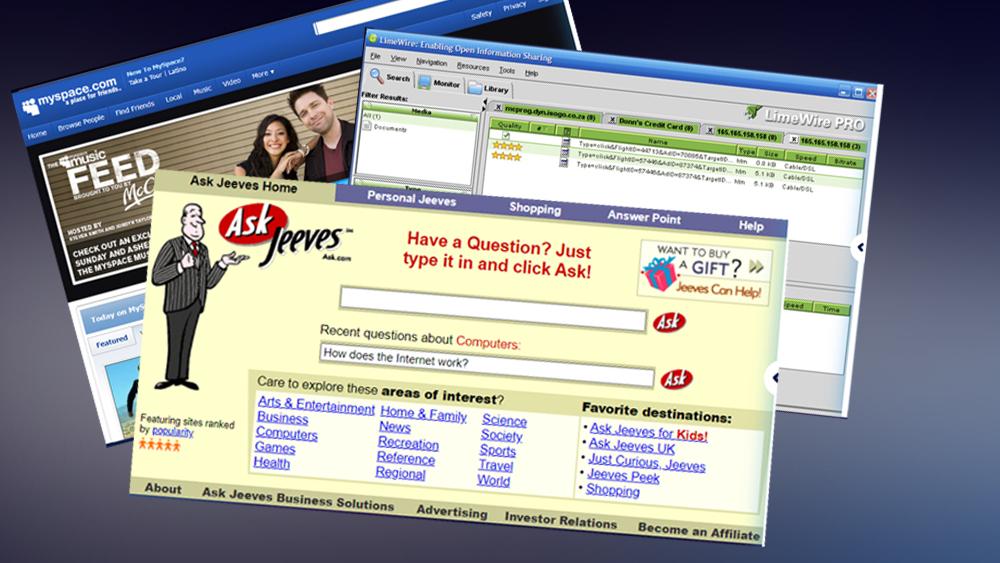
Email, the first browsers, Yahoo!, Amazon, Google...
Everything was born in this period.
The internet began reaching homes, and the "digital age" officially began.
📱 The 2000s: The Age of Mobile Internet
When smartphones came out, the internet went into our pockets.
With this period:
Social media platforms
Instant messaging
Mobile apps
became widespread.
The internet was no longer just for looking up information; it turned into a structure used for all of daily life.
🤖 From 2010 to Today: Data, Artificial Intelligence, and Endless Connection
Today the internet has become not a "network" but an ecosystem.
Artificial intelligence
Cloud systems
The Internet of Things
5G connectivity
Big data analytics
All of them are giant structures built on top of the internet.
Now even the kettle at home can connect to the internet.
Communication continues not only between people, but also between devices.
🔮 So What About the Future?
Most likely, people will use the internet without seeing it:
Everything around us will be automatically connected.
Massive data networks, personal AI assistants, and perhaps entirely virtual cities...
The internet started in 1960 with two letters sent through a cable.
Today it has become a giant nervous system carrying the world economy, communication, and lifestyle.