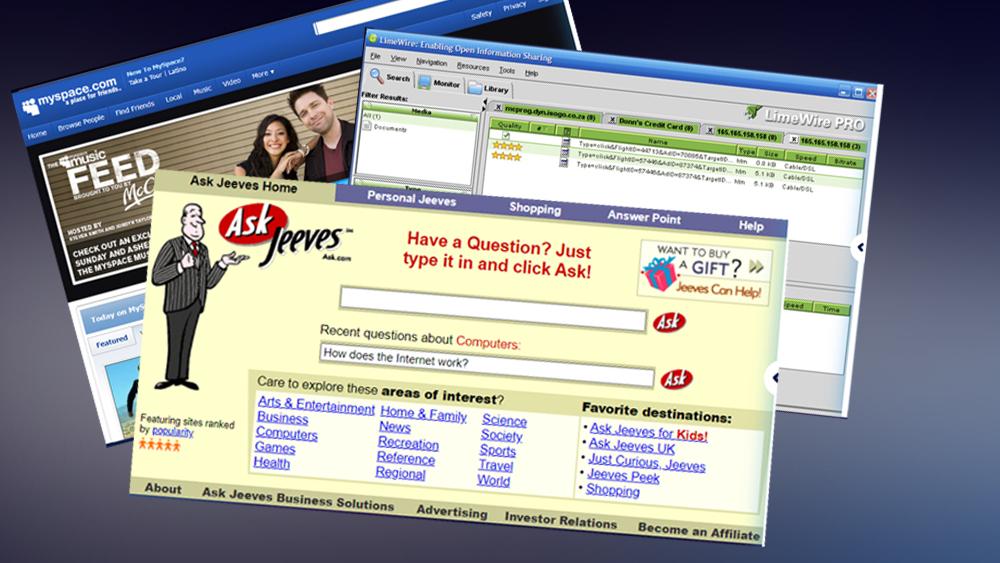
Most of the websites we open today look pretty similar to each other.
A menu at the top.
A big image in the middle.
Cards underneath.
A login button somewhere.
But the internet didn't always look like this.
In the 1990s and early 2000s, the web was a much more experimental, colorful, and sometimes genuinely weird place.
GIFs, visitor counters, Flash animations, shiny buttons, and "this site is best viewed at 800×600 resolution" warnings were normal parts of the internet.
There are still ways to explore that world today.
If you love the weird corners of the internet, Garip Siteler exists for exactly that.
But this time we're not going to new sites — we're going to the internet's past.
1. Wayback Machine — See the History of a Website
Wayback Machine is probably the first site you should know about when researching internet history.
You type in a web address.
Then you pick a date from the site's archived versions from the past.
For example, by searching for a site that's been active for years, you can examine:
- how it looked in 2005,
- how its logo changed,
- its old products,
- its old pages.
To Try It Out
Open the Wayback Machine and type in the address of a website you've been using for years.
Then go to the earliest date you can find.
You'll probably see something completely different from the site you use today.
Images, JavaScript, or other interactive features on some old pages may work incompletely. Web archives can't preserve every element of every page flawlessly.
2. Web Design Museum — The Museum of Web Design
Web Design Museum is one of those projects that genuinely turns a website into a museum.
It has screenshots and archives of old:
- websites,
- mobile apps,
- software,
- Flash games.
For example, you can see the early designs of Google, Apple, YouTube, or Netflix.
After getting used to today's minimalist designs, looking at 1990s websites can feel quite strange.
3. Web Design Museum 90s — Step Into the Internet of the '90s
Web Design Museum also has a special collection of 1990s web design.
Here you can see old websites of many famous brands by year.
For example, you can look at the early web designs of names like:
- Yahoo,
- Amazon,
- Apple,
- Microsoft,
- LEGO,
- NASA,
- Nintendo.
It's especially interesting to see how simple the first websites of companies that are now worth billions of dollars were.
It also makes it very clear just how much web design has changed in roughly 30 years.
4. OldMapsOnline — Go Back Even Further Than the Internet
If internet history wasn't enough, let's go back a little further.
OldMapsOnline lets you explore historical maps from different regions of the world.
You can pick a city or country and examine that area's old maps.
This site is a nice stop for those who want to move from internet archaeology to actual historical research.
Even searching for old maps of Istanbul, Europe, or any other part of the world is an interesting experience in itself.
5. CERN — See Traces of the First Website
If you want to go to the place where the World Wide Web was born, you can look at the first website project preserved by CERN.
Almost nothing you'd expect from today's web design is there.
No big photos.
No animations.
No card designs.
No social media buttons.
Basically, there's text and links.
And perhaps one of the most interesting sides of the internet reveals itself here:
The core idea of the web was actually extremely simple.
Reaching one piece of information from another through links.
The massive internet ecosystem we use today was built on this simple idea.
6. Internet Archive — Not Just Websites
Internet Archive is the organization behind the Wayback Machine, and it also offers a much broader digital archive.
Inside the archive you can find:
- books,
- videos,
- audio recordings,
- software,
- games,
- old digital materials.
It's a very deep archive, especially if you're interested in old software and digital culture.
The odds are quite high that you'll go in to search for one thing and discover something completely different.
Why Is the Old Internet So Interesting?
Because the old internet was less standardized.
Today, many websites share similar usage patterns because of big platforms and design systems.
Back then, developers and users didn't yet know exactly how the web should look.
That produced:
- strange navigation,
- meaningless animations,
- personal web pages,
- experimental designs,
- extremely creative ideas.
Some of them were bad.
Some were unusable.
But many had something we see less of on the web today:
personality.
Garip Siteler Actually Carries a Bit of the Old Internet Idea
This is one of the things we love about the idea behind Garip Siteler.
Instead of seeing the internet as nothing but Instagram, YouTube, X, or a few big platforms, it's about rediscovering the smaller corners of the web.
Experiments made by independent developers.
Small tools that solve a single problem.
Weird projects nobody understands the point of.
And websites that serve no purpose at all but that you don't want to close.
There's still a bit of the old internet spirit inside the modern internet.
You just have to find it.