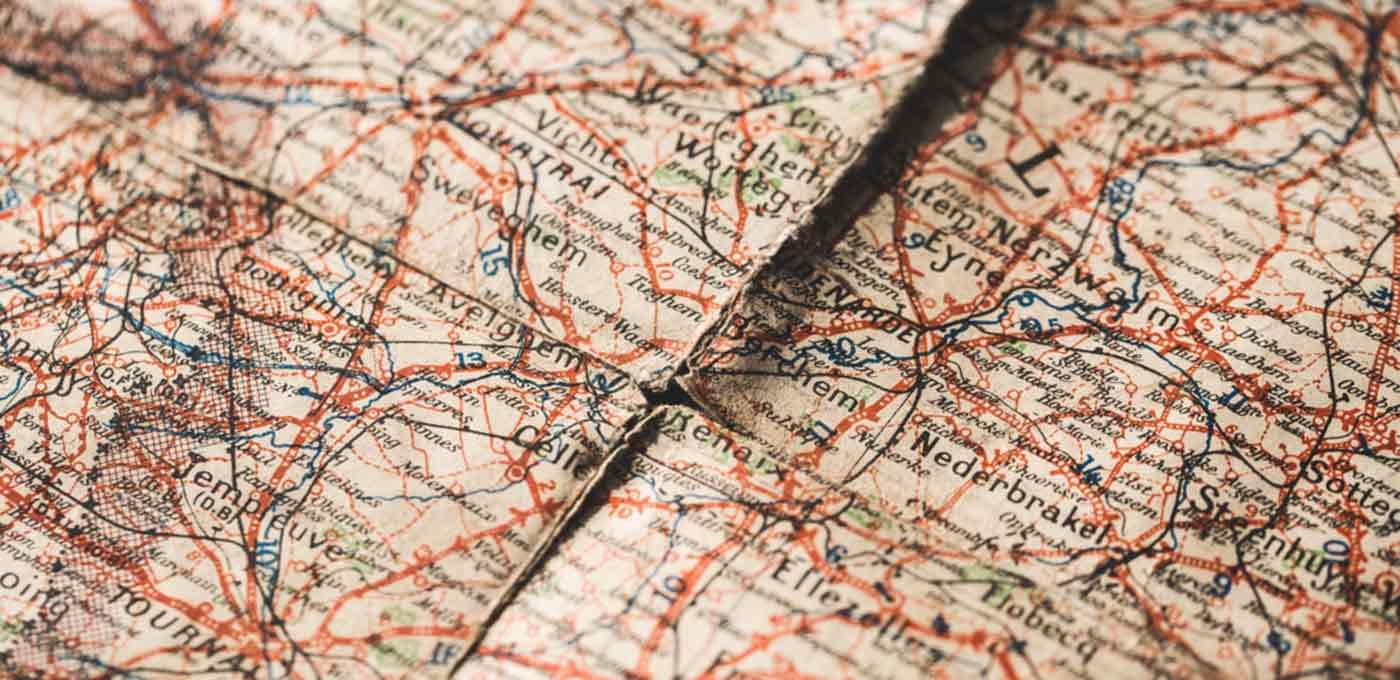
We usually use maps to figure out how to get somewhere.
But there are websites on the internet that use maps for far stranger purposes than navigation.
You can listen to radio stations from around the world on a map, teleport to a random country road, watch the winds in the atmosphere, or track the planes in the sky at this very moment.
If you enjoy discovery sites like these, you can keep exploring the internet's lesser-known corners on Garip Siteler.
Now let's look at the world a little differently.
1. MapCrunch — Teleport to a Random Place in the World
MapCrunch has an extremely simple idea that can become addictive.
You press a button, and the site drops you into a Street View image from a random spot on the planet.
In an instant, you can find yourself:
- in a small village in Japan,
- on a mountain road in Norway,
- in a town in South America,
- on a deserted road in Australia.
You can also choose a country or region.
A Little Game
Send yourself to a random place.
Then, without using any map help, try to guess which country you're in from the signs, vehicles, and surroundings.
A geography game for a few minutes is ready and waiting.
2. Radio Garden — Travel the World Through Radio
Radio Garden lets you discover radio stations around the world on an interactive globe.
Turn the map to Tokyo and listen to Japanese radio.
Then head to Brazil.
After that, move on to a small European city.
Without physically going anywhere, within a few minutes you can hear the sounds of different parts of the world.
That's why Radio Garden isn't just a radio site.
It's a kind of audio world map.
3. Earth Nullschool — Watch the World's Winds Live
Earth Nullschool shows the planet's atmosphere almost like a living organism.
With lines moving across the map, you can examine all kinds of data such as:
- wind,
- temperature,
- ocean currents,
- waves,
- atmospheric particles.
Watching the giant weather systems over the oceans is especially impressive.
It feels much more like a planet simulation than a regular weather app.
4. Flightradar24 — Track the Planes in the Sky
Flightradar24 lets you follow a huge number of flights around the world on a map.
The number of planes you see when you first open the map can be a bit surprising.
By clicking on a plane, depending on the available data, you can access information such as:
- departure point,
- destination,
- flight number,
- aircraft type,
- altitude.
It's one of those sites you can use when you're wondering where a plane flying over your house is headed.
5. Google Earth — Explore the World in Three Dimensions
Google Earth focuses much more on exploring the world than the classic Google Maps experience.
You can examine cities, mountains, and different geographic regions in three dimensions.
Places like:
- the Himalayas,
- the Grand Canyon,
- Tokyo,
- New York,
- volcanic islands
are especially enjoyable to explore from above.
If you open Google Maps asking "how do I get there?", you open Google Earth asking "what's here?"
6. OldMapsOnline — See Old Maps of the Same World
OldMapsOnline is a bit different from modern maps.
Here, we're traveling into the past.
You can explore historical maps made for different regions of the world.
It's possible to search for a specific city or region and reach maps made in past years.
It's a site where anyone interested in:
- history,
- urban planning,
- geography,
- cartography
can spend hours.
7. Google Trends — See What People Are Searching For on a Map
Google Trends isn't actually a map site in the classic sense.
However, examining how search data is distributed across countries and regions is a great example of using maps from another angle.
For example, by comparing two different words, you can see which one is searched for more in which region.
So in a sense, you're mapping not the physical world but human interest on the internet.
Maps Aren't Just for Finding Your Way
What makes these sites interesting is that they show the same world through completely different layers of data.
In one, there are roads.
In another, radio stations.
In another, wind.
In another, planes.
In another, borders drawn hundreds of years ago.
The map itself doesn't actually change.
What changes is the data we look at the world through.
These kinds of sites are exactly the internet projects we love to collect on Garip Siteler.
They have a purpose, but at the same time they're very hard to close without poking around for a few minutes.
Discover More Interesting Sites
If you liked the map sites, you can find similar interactive projects in the Fun, Education, and Useful categories on Garip Siteler.